- The World Unfolding
- Posts
- The 5 American Road Trips Worth Planning Right Now
The 5 American Road Trips Worth Planning Right Now
Why driving beats flying in 2026 (especially with kids)

Jeff Rehmar
January 01, 2026

Read time: 9 minutes 33 seconds
Have kids? Road trips are likely your best option.
We control the stops. Pull over when she's hungry. Find an Airbnb with a kitchen instead of eating every meal out. Drive during nap time. If she has a meltdown, we're not trapped at 35,000 feet with 200 judging strangers.
Turns out, we're not alone. More American families are choosing road trips over flights in 2026 - not because they can't afford plane tickets, but because driving offers something airlines can't: control over your own schedule and comfort.
These five road trips work whether you're traveling with a baby, wrangling teenagers, or finally taking that trip now that the kids are grown. I've included costs, timing, and specific places to stay. Start planning now for spring and summer.
1. Pacific Coast Highway: San Francisco to Big Sur
The Route: 280 miles, 4-5 days
Best Time: April through early June (wildflowers bloom, whales migrate, roads clear of winter storm damage)
Start at the Golden Gate Bridge when morning fog lifts off the bay. Drive south through Half Moon Bay where elephant seals sprawl across beaches like enormous slugs. Kids stare. Adults take photos. Everyone's amazed.
Monterey Bay Aquarium deserves a full morning. The jellyfish room hypnotizes everyone - pulsing, glowing, impossibly graceful. Spend the afternoon kayaking the bay or walking Cannery Row.
Then comes Big Sur.
The road climbs into mountains and hangs over the Pacific for 90 miles. Every curve reveals something new. Bixby Bridge spans a canyon 260 feet above the creek. McWay Falls drops 80 feet onto purple sand where waves crash into mist. Nepenthe restaurant perches 800 feet up - your burger costs $25 but the view makes you forget.
Cell service disappears for long stretches. Just ocean, cliffs, and actual conversation.
Where to Stay:
Monterey: Portola Hotel & Spa ($180-250/night) - Three blocks from the aquarium, pool for afternoon cooldowns, walking distance to everything
Big Sur: Ragged Point Inn ($200-280/night) - Rooms literally perched on cliffs, hot tubs with ocean views, restaurant on-site so you don't have to drive after dark. We’ve stayed with our mini-goldendoodle in April and loved it!
San Luis Obispo: Marriott properties start at $180/night with pools and included breakfast (saves $40-60/morning for families)
What It Costs: $1,800-2,400 for 4 nights (family of 4 including gas, lodging, food)
Why It Works: Beach stops every 30 minutes mean restless kids can burn energy. Tide pools keep them busy for hours. Wine tasting in Paso Robles works for adults while kids play in tasting room gardens. If you're starting from Southern California, you can fly into one of the smaller airports to skip LA traffic, or just drive up from home.
Book By: February for spring travel, April for summer
2. Michigan Great Lakes: Sleeping Bear Dunes to Mackinac Island
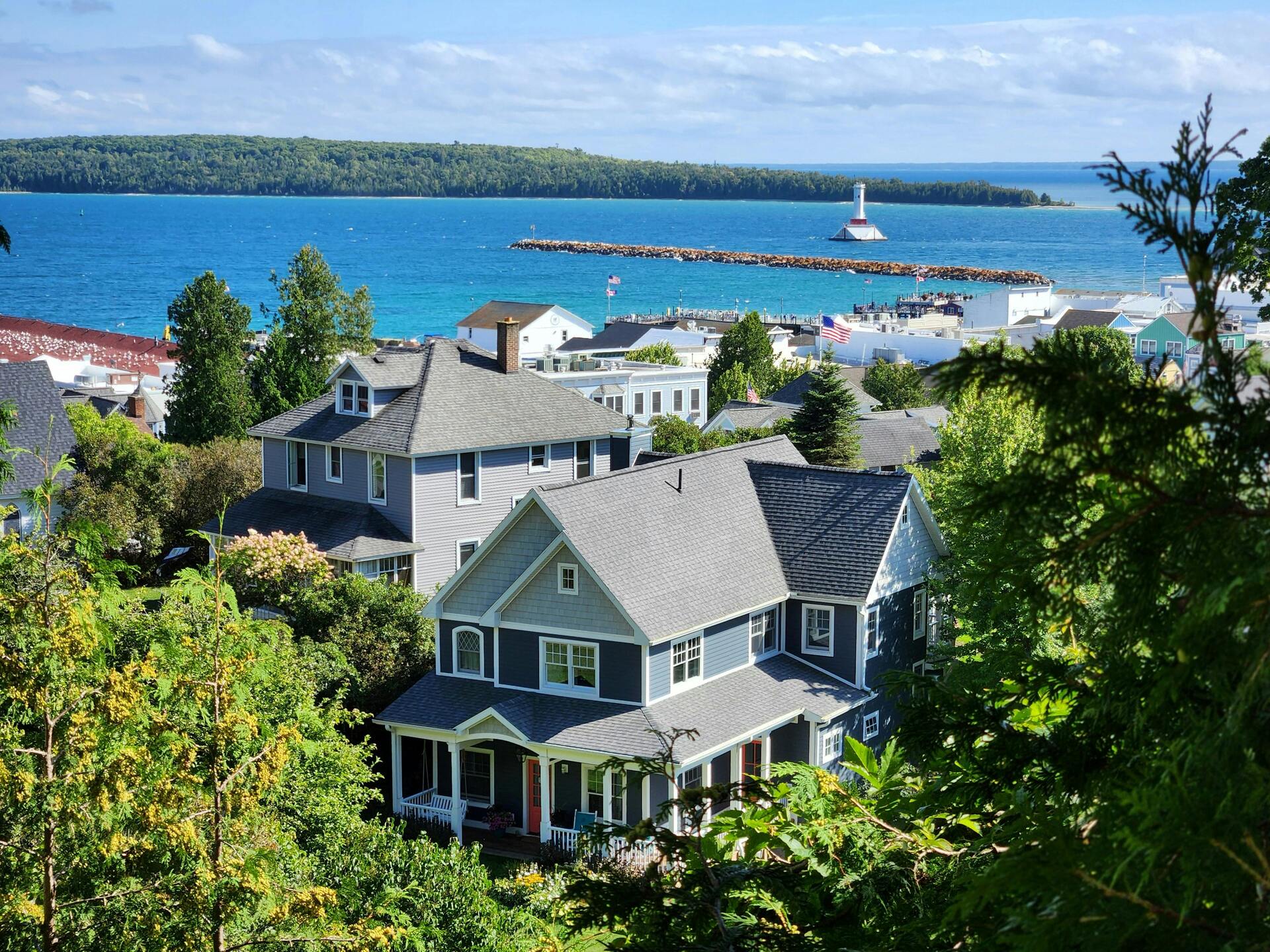
The Route: 320 miles, 4-5 days along Lake Michigan
Best Time: Late June through August (water warms enough for swimming, cherry season in Traverse City, long daylight hours)
Most people don't realize the Great Lakes feel like oceans. Waves, beaches, horizons where water meets sky. Except the water's fresh, warmer than the Pacific, and there are no jellyfish.
Sleeping Bear Dunes is the surprise. Massive sand dunes rise 450 feet above Lake Michigan. The Dune Climb lets kids run down steep sand hills screaming (then realize they have to climb back up). Pierce Stocking Scenic Drive has overlooks where the dunes, forests, and blue water spread out like a postcard.
Traverse City is Michigan's wine country with 40+ wineries. Downtown has galleries, ice cream shops, and Folgarelli's Market for picnic supplies. Time your visit for the National Cherry Festival (early July) when the whole town celebrates with parades, concerts, and cherry everything.
Charlevoix looks like a storybook. Earl Young mushroom houses have curved roofs, stone walls, and hobbit-door charm. The downtown has boutiques and restaurants on a yacht-filled harbor.
Then comes Mackinac Island.
Cars have been banned since 1898. You arrive by ferry, and the modern world disappears. Horse-drawn carriages clip-clop past Victorian hotels. Fudge shops pump cinnamon-sugar smells into the streets. Bike the 8-mile loop around the island or just sit on the Grand Hotel porch like you're in a different century.
Where to Stay:
Empire (near Sleeping Bear): Boardwalk Condominiums ($160-220/night) - Full kitchens, steps from beach, washer/dryer for kid disasters
Traverse City: Cherry Tree Inn ($140-200/night) - Pool, breakfast included, walking distance to downtown
Mackinac Island: Mission Point Resort ($220-340/night) - Not cheap but includes ferry, bikes, lawn games, and unbeatable location. Or stay in Mackinaw City on the mainland ($120-180/night) and day-trip by ferry ($30 round trip)
What It Costs: $1,700-2,500 for 4 nights (family of 4)
Why It Works: Beaches without ocean dangers (no riptides or sharks). Dunes are exhausting fun for kids. Traverse City has both wine for adults and activities for children. And Mackinac Island delivers nostalgia that resonates across generations - grandparents remember visiting as kids, now they're bringing grandchildren.
Book By: January for peak summer (Mackinac Island sells out early)
3. Utah National Parks: Zion to Bryce to Capitol Reef
The Route: 350 miles, 5-6 days through red rock country
Best Time: April-May or September-early October (summer regularly hits 105°F+ in the canyons)
Fly into Las Vegas, drive 2.5 hours to Springdale. You'll know you're close when red cliffs start rising thousands of feet on both sides.
Zion National Park has one main canyon and it's spectacular. The Narrows hike takes you up a river between slot canyon walls - you're walking in water, but it's worth getting wet. Angels Landing is the famous hike with chains bolted to rock and 1,000-foot drops. Not for everyone, but the views are legendary.
Bryce Canyon sits 90 minutes away through ranch country. It's not actually a canyon - it's an amphitheater of orange rock spires called hoodoos. Sunrise Point at dawn looks like another planet. The Navajo Loop Trail drops you into the formations for 1.3 miles of walking among them.
Highway 12 to Capitol Reef is one of America's most scenic roads. You'll climb over Boulder Mountain at 9,000 feet where aspens shimmer gold in fall and wildflowers blanket meadows in spring. Capitol Reef is the forgotten national park, meaning fewer crowds. There are orchards where you can pick fruit for free, and the Gifford Homestead sells homemade pie for $5 that tastes like someone's grandmother baked it this morning.
Where to Stay:
Springdale: Desert Pearl Inn ($180-280/night) - Right outside Zion's gates, riverside patios, excellent restaurant on-site
Bryce: Best Western Bryce Canyon Grand ($140-200/night) - Indoor pool for after-hike recovery, free breakfast, close to park entrance
Torrey (Capitol Reef): Capitol Reef Resort ($130-190/night) - Cabins with kitchenettes, gift shop has local art, quiet location perfect for stargazing
What It Costs: $2,200-3,000 for 5 nights (family of 4 including car rental from Vegas)
Why It Works: Every park looks completely different - Zion's towering cliffs, Bryce's bizarre hoodoos, Capitol Reef's hidden canyons. Hikes range from easy paved viewpoint walks to challenging climbs, so everyone finds their level. Kids genuinely believe they're on Mars when they see these red rock landscapes.
Book By: December for spring travel, February for fall
4. Coastal Maine: Portland to Acadia National Park
The Route: 180 miles, 4-5 days along the rockbound coast
Best Time: June through early September (warm enough for beaches, lobster shacks fully operational, long daylight)
Portland surprises people. The Old Port has cobblestone streets, independent bookshops, and some of New England's best restaurants. Eventide Oyster Co. serves brown butter lobster rolls that ruin you for all others. Allagash Brewing has a tasting room. Portland Head Light is Maine's most photographed lighthouse.
Drive north on Route 1 and the coast unfolds. Kennebunkport has massive summer homes and Walker's Point where the Bush family vacations. Camden's harbor is what people picture when they imagine Maine - white sailboats, pine-covered hills, church steeples reflecting in calm water.
Acadia National Park sits on Mount Desert Island connected by causeway. Park Loop Road winds past pink granite cliffs dropping straight into the Atlantic. Jordan Pond has a walking path around mirror-still water with mountains reflected perfectly. Thunder Hole shoots seawater 40 feet up when waves hit right.
Wake up early one morning and drive to Cadillac Mountain for sunrise. From October through March it's the first place in America to see dawn. The rest of the year it's still worth it - watching light spread across islands and ocean while drinking coffee from a thermos.
Bar Harbor is the main town with restaurants, shops, and ice cream places that have lines out the door all summer.
Where to Stay:
Portland: Press Hotel ($180-280/night) - Converted newspaper building in the Arts District, walking distance to Old Port
Camden: Whitehall ($160-240/night) - Historic inn with porch rockers, excellent restaurant, feels like classic Maine
Bar Harbor: Atlantic Oceanside Hotel ($200-320/night) - Right on the water, heated pool, easy walk to downtown, or try Bluenose Inn ($220-340/night) with ocean views from every room
What It Costs: $2,000-2,800 for 4 nights (family of 4)
Why It Works: Every meal involves lobster somehow - rolls, whole lobsters, lobster mac and cheese. Rocky beaches offer different experiences than sandy ones - kids spend hours tide pooling, finding sea glass, watching boats. The air smells like pine and salt. Acadia offers easy coastal walks plus challenging mountain hikes all in one park.
Book By: February for summer travel (Bar Harbor books fast by March)
Run ads IRL with AdQuick

With AdQuick, you can now easily plan, deploy and measure campaigns just as easily as digital ads, making them a no-brainer to add to your team’s toolbox.
You can learn more at www.AdQuick.com
5. Texas Hill Country to Big Bend
The Route: 450 miles, 5-6 days
Best Time: March-April (bluebonnets bloom across fields, perfect weather before summer heat arrives)
Austin's weird and owns it. Barton Springs Pool stays 68°F year-round fed by underground springs - locals swim there Christmas morning. Franklin Barbecue has a line by 9am but the brisket justifies the wait (or skip the line at la Barbecue). Sixth Street has live music every night.
Drive 90 minutes west to Fredericksburg - German heritage town that's now Hill Country wine country. Clear River Pecan Company makes peach cobbler that locals debate. Enchanted Rock is a giant pink granite dome you can summit in 45 minutes for views across rolling hills dotted with live oaks.
San Antonio comes next. The Alamo's smaller than expected but the River Walk delivers. Rent a river boat, eat Tex-Mex at Mi Tierra (open 24/7 with roaming mariachi bands), and tour the missions that earned UNESCO World Heritage status.
Then comes the five-hour drive to Big Bend.
Landscape empties as you drive west. Bigger ranches. Fewer towns. Until you reach one of America's least-visited national parks. The Rio Grande cuts through canyons with Mexico on one side, Texas on the other. Mountains rise from desert floor. At night, stars explode across the darkest skies in the continental US.
Hike Santa Elena Canyon where 1,500-foot cliffs rise on both sides of the river. Soak in natural hot springs. Drive Ross Maxwell Scenic Drive at sunset when the Chisos Mountains turn purple and gold.
Where to Stay:
Fredericksburg: Hangar Hotel ($160-240/night) - Aviation-themed boutique hotel with classic diner, pool, unique vibe
San Antonio: Drury Plaza Hotel Riverwalk ($140-220/night) - Free dinner included (seriously), walking distance to everything, great for families
Terlingua (Big Bend): La Posada Milagro ($140-200/night) or book Chisos Mountains Lodge inside the park ($180-260/night) six months ahead - it's worth it to be inside the park for sunrise
What It Costs: $2,200-3,200 for 5 nights (family of 4)
Why It Works: Cities, small towns, and genuine wilderness all in one trip. BBQ becomes a daily ritual. Bluebonnets create photo opportunities every few miles. Big Bend feels like reaching the edge of the world - remote, quiet, completely different from urban Texas. It's safe despite the border location.
Book By: January for bluebonnet season (March-April books up fast)
Why This Matters Now
Flight delays. TSA lines. Luggage fees. Keeping a baby entertained at 35,000 feet.
Road trips delete all of it.
You leave when you want. Stop when you need to. Change plans without calling an airline. Find an Airbnb with a kitchen so you're not eating every meal out with a tired kid.
I'm thinking about the couple on my flight who gasped at mountains below. Road trips give you those moments for hours instead of seconds. And there's something about watching America scroll past your windshield - landscapes shifting, accents changing, food evolving mile by mile - that you miss at cruising altitude.
A 4-5 day road trip costs $1,600-2,800 for a family of four (gas, lodging, food, park fees). That's half what you'd spend flying somewhere and dealing with rental cars on the other end.
Book lodging by February for spring trips, by April for summer. The best places fill first. Great guestbooks are waiting for your signature.
Until next Thursday,
Jeff
Quick favor: Are you reading this on your phone or computer? Hit reply and let me know - I'm trying to make these newsletters as easy to read as possible.
Planning one of these trips? Tell me which one. I read every response and I'm curious which route sounds best to you.
Know someone planning a road trip this year? Forward this to them - they can subscribe at theworldunfolding.com